
Badminton: The World’s Fastest Racket Sport
At first glance, it might seem like a leisurely backyard pastime, a gentle game of hit and giggle suitable for a summer barbecue. But step onto a competitive court, and the illusion shatters immediately. This is badminton, the world’s fastest racket sport, a breathtaking blend of explosive power, balletic grace, and surgical precision that demands athleticism of the highest order.
While casual players are content to simply keep the shuttlecock in the air, the sport at its elite level is a different universe entirely. It is a high-octane spectacle where smashes travel faster than a Formula 1 car on the straight, and where reflexes are measured in milliseconds.
A Feathered Projectile Like No Other
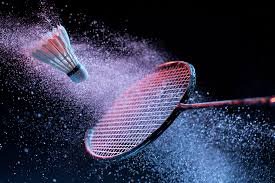
The heart of the game’s unique character is its projectile: the shuttlecock, or “birdie.” Made of sixteen goose feathers embedded in a cork base, this conical object is an aerodynamic marvel. Unlike a ball, its feathered skirt creates immense drag, causing it to decelerate rapidly in flight. This means a smash hit at over 200 miles per hour from the back of the court will slow down significantly by the time it reaches the backline, making defensive retrievals possible.
However, this same aerodynamic property also makes the shuttlecock incredibly sensitive to spin and angle. A deft flick of the wrist can send it tumbling just over the net, forcing a lunging recovery. The shuttlecock does not bounce; the rally is continuous until it hits the floor. This simple fact creates a sport of relentless, high-intensity movement, where players must cover every inch of the court in a heartbeat.
The Attributes of a Modern Player
To watch a professional badminton match is to witness a masterclass in athletic versatility. The modern player must possess the sprinting speed of a wide receiver, the jumping power of a basketball player, and the wrist flexibility of a baseball pitcher.
The smash is the sport’s quintessential shot, a leaping, full-body strike that unleashes fury on the shuttle. Legends like India’s Prakash Padukone and Indonesia’s Rudy Hartono were pioneers of the attacking game, but modern exponents like Malaysia’s Lee Chong Wei and Denmark’s Viktor Axelsen have turned it into a science, combining power with pinpoint accuracy.
Yet, power alone is not enough. The best players are masters of deception. The drop shot, played with the same preparatory action as a smash, can trick an opponent and cause them to stumble forward in vain as the shuttle dies gracefully just over the net. The net shot, caressed with such delicate touch that it rolls over the tape and tumbles downwards, is an art form in itself, forcing the opponent to lift the shuttle and offer an attacking opportunity. This constant battle between power and finesse, between attacking and defending, is what makes a rally so compelling.

A Truly Global Game, Dominated by Asia
While badminton is played and loved worldwide, its competitive heartland is undoubtedly Asia. Nations like China, Indonesia, Malaysia, South Korea, Japan, and India treat the sport with a fervor usually reserved for football in Europe or cricket in the subcontinent.
Indonesia, in particular, has a claim to being the spiritual home of the sport. The atmosphere in the Istora Gelora Bung Karno stadium in Jakarta during the Indonesia Open is legendary—a cauldron of noise, color, and passionate support that can intimidate even the most seasoned players.
China has long been the superpower of the sport, consistently producing a conveyor belt of champions in all five disciplines (men’s and women’s singles, men’s and women’s doubles, and mixed doubles). Players like Lin Dan, widely considered the greatest men’s singles player of all time, combined raw power with incredible mental fortitude to dominate for over a decade. On the women’s side, players like Zhang Ning, Li Xuerui, and more recently, Chen Yufei and An Se-young from South Korea, have showcased the incredible athleticism and tactical depth of the women’s game.
The Pinnacle: The All England and the Olympics
In the world of badminton, titles are measured with a stopwatch. The oldest and most prestigious tournament is the All England Open Badminton Championships, first held in 1899. Winning the All England is a career-defining achievement, a testament to a player’s ability to conquer the sport on its most hallowed stage.
However, the ultimate prize in the modern era is an Olympic gold medal. Since its introduction as a full-medal sport at the 1992 Barcelona Olympics, badminton has become a highlight of the Summer Games. The quadrennial event elevates the sport to a global platform, creating national heroes and unforgettable moments. The intensity of an Olympic final, with the weight of a nation’s expectations on the players’ shoulders, is unmatched.
The Future of the Fastest Sport
Badminton continues to evolve. The pace of the game is increasing, rallies are becoming more physical, and the margins for error are shrinking. The rise of European powerhouses like Denmark and Spain (with the sensational Carolina Marín) has challenged Asian dominance, promising a more competitive and diverse future.
Technological advancements in rackets and stringing allow players to generate even more power and control, while sports science helps athletes maintain peak fitness and avoid injury. The introduction of new rally-point scoring systems has made the game faster and more unpredictable for spectators.
From the local community center to the packed stadiums of the BWF World Tour, badminton is a sport of captivating contrasts. It is a game of explosive violence and delicate touch, of lung-busting endurance and split-second reactions. So, the next time you see a shuttlecock floating gently through the air, remember: it is the harbinger of one of the most thrilling, athletic, and graceful sports on the planet.